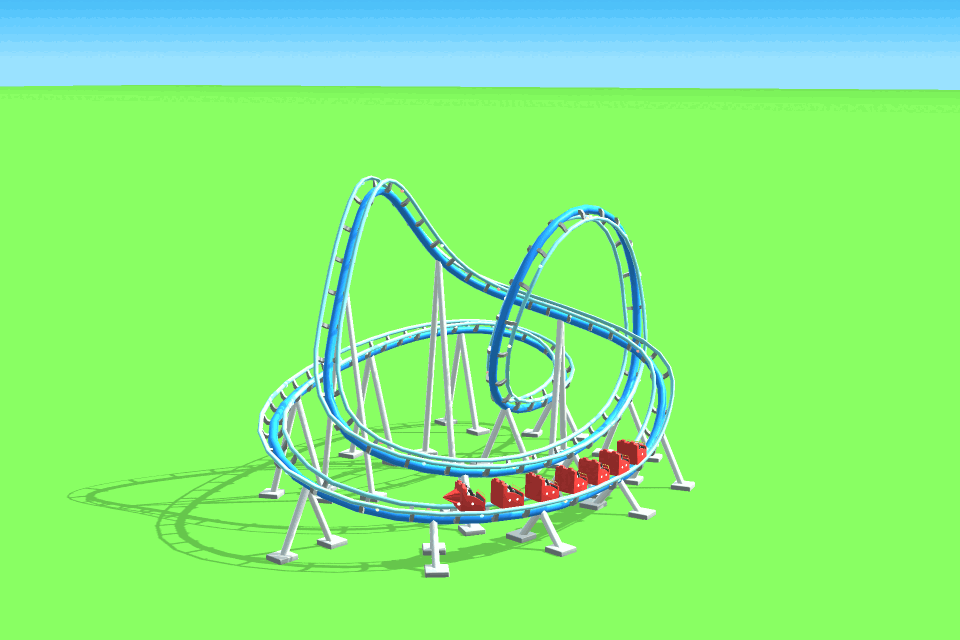
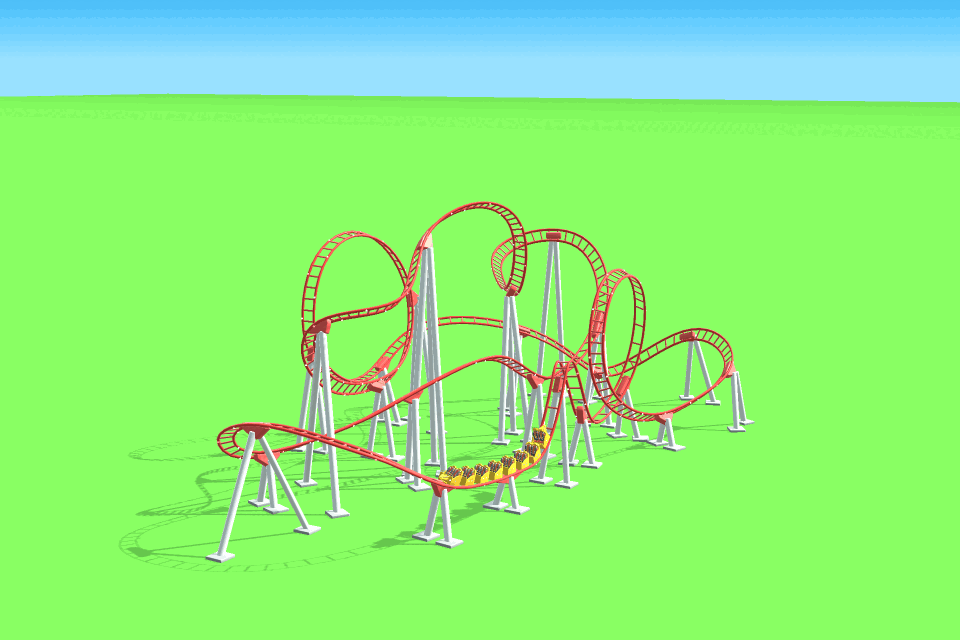
Nineteen rides, from a bouncy castle to a looping coaster. Every one of them carries four ratings, costs money to run, and hands you the dials that decide how it behaves.
Four steps from an empty patch of grass to a queue out of the door.
Pick a ride, turn it with R and drop it on clear grass. The bigger the footprint, the bigger the bill.
A fence goes up around the ride with an entrance arch and an exit, and you can move either door anywhere along the perimeter.
Draw a queue line from the entrance to a road. Until it connects, the entrance marker stays red and nobody comes.
Guests pay to board, sit through the cycle and come out the exit - a little more tired and, if you got it right, a lot happier.
Every ride carries four ratings from 0 to 10. They are what guests judge it on, and they pull in different directions.
How wild the ride is. Thrill seekers hunt for it, families avoid it, and every ride costs a guest energy when they board - the wilder it is, the more it takes.
Who it suits. A park of nothing but extreme rides has a lot of guests wandering about with nothing they want to go on.
How good it looks in the park. A high scenery ride earns its keep from everyone who walks past it, not just from the people on it.
What it does for the park's reputation, and so for how many guests turn up at the gates tomorrow.
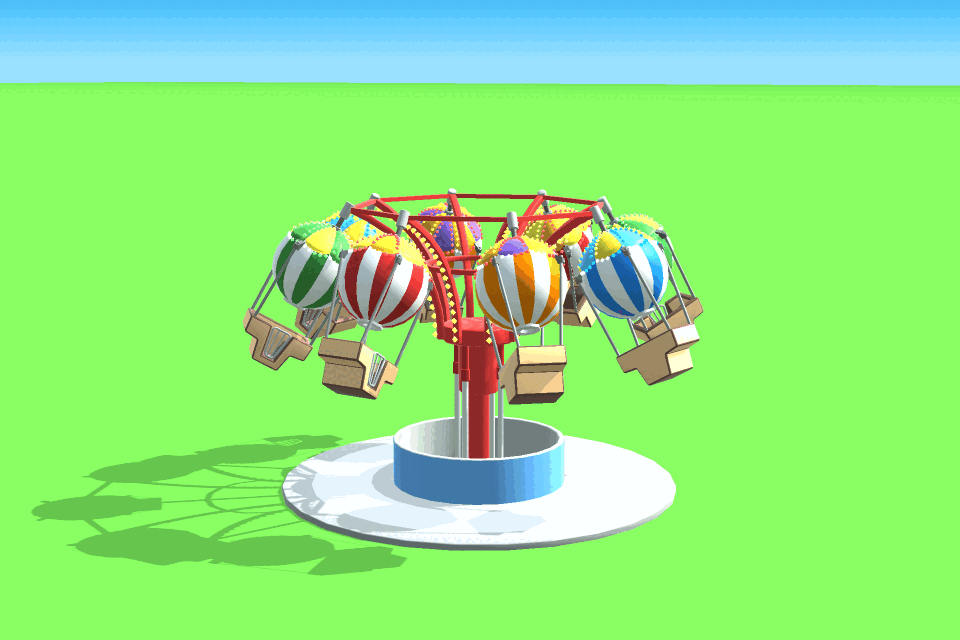
Everybody rides these. Balloons, carousels, a slow lap of the lake.
The workhorses of a park - fun for most guests, frightening for none.
Long queues from the guests who came for exactly this, and empty seats from the ones who did not.
The headline rides. Expensive, exhausting, and the reason a park gets talked about.
A ride that is both gentle and sat down gives energy back, second by second, for as long as the guest is on it. The sky ride, the mini ferris wheel and the boat ride are the three, and a long lap of a big boat circuit can take a worn-out guest all the way back to full. A bench is quicker and free, but it only tops them up partway.
Guests who go straight from a hot dog onto something wild bring it back up, and a puddle of sick upsets everyone who walks past it. Toilets and a cleaner or two are part of running a thrill park - so is thinking about where you put the snack bar.
Ratings, prices and research tiers as they stand in the current build. Everything here is still being tuned.
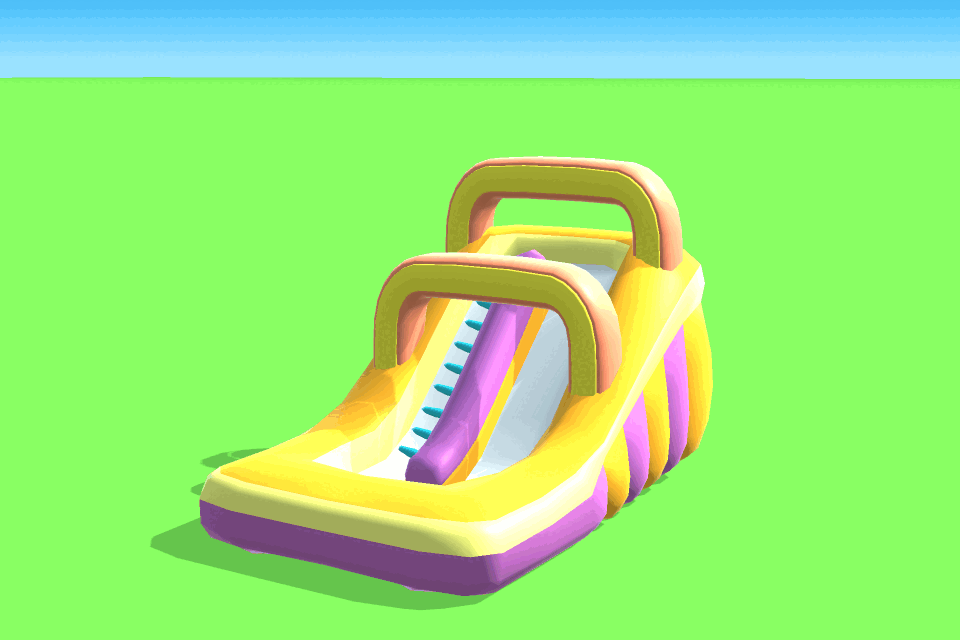
The cheapest ride in the game and the one every small guest heads for first. Nobody sits down - they bounce about inside it for the whole cycle.
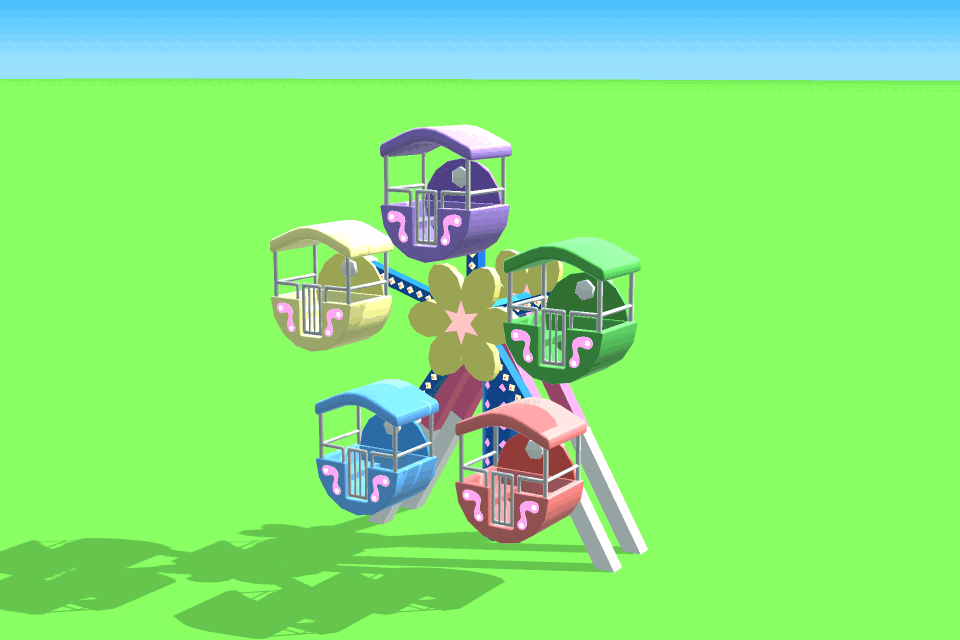
A little wheel that anybody will queue for. Gentle and sat down, so guests come off it rested rather than worn out.
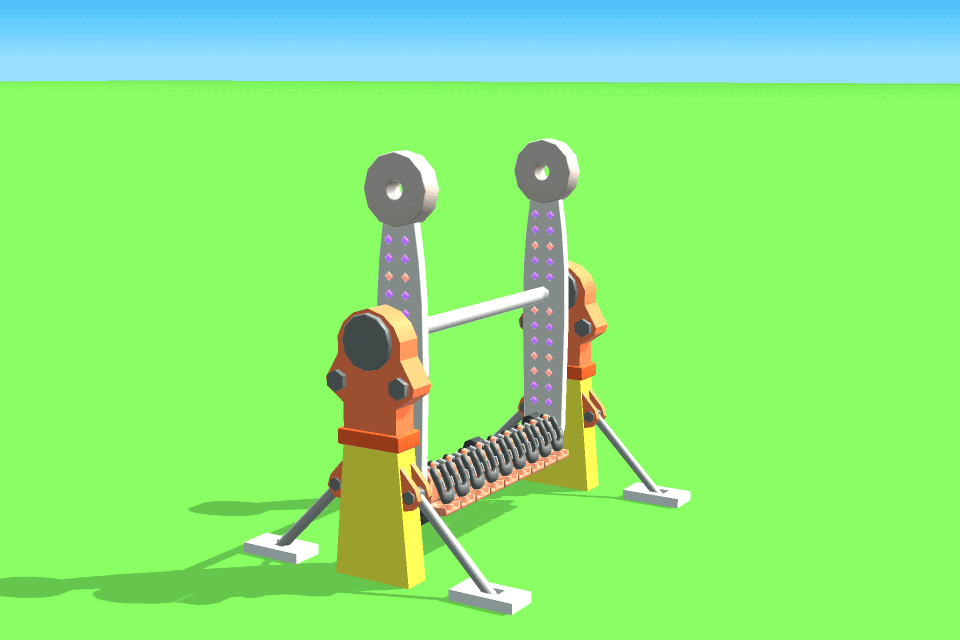
The best looking thing you can put in a park - a perfect 10 for scenery - and a proper rest for whoever is riding it.
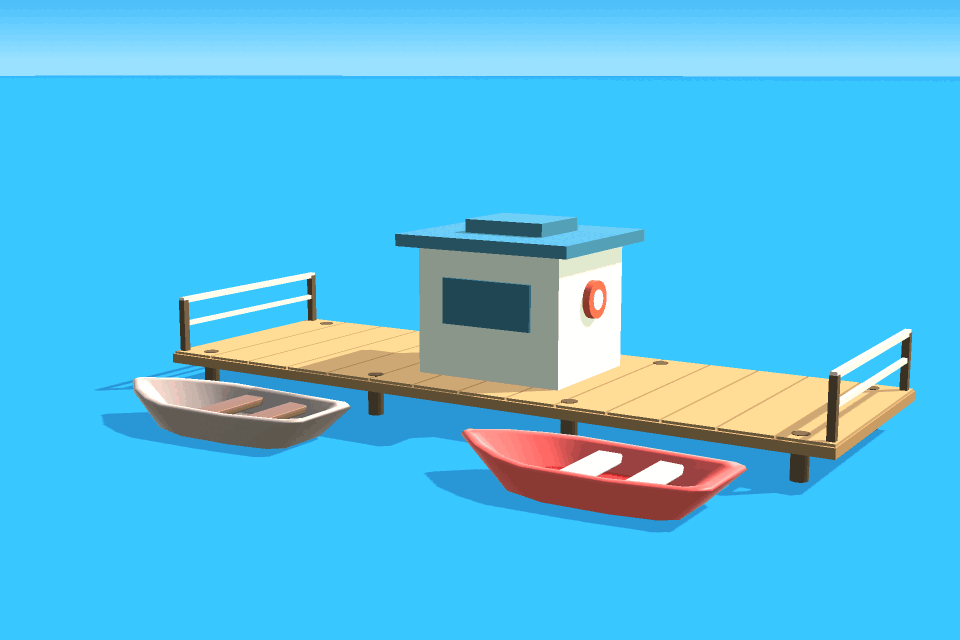
The one ride whose track you design yourself. A jetty, a fleet of up to six boats, and a circuit you paint on the water. See below.
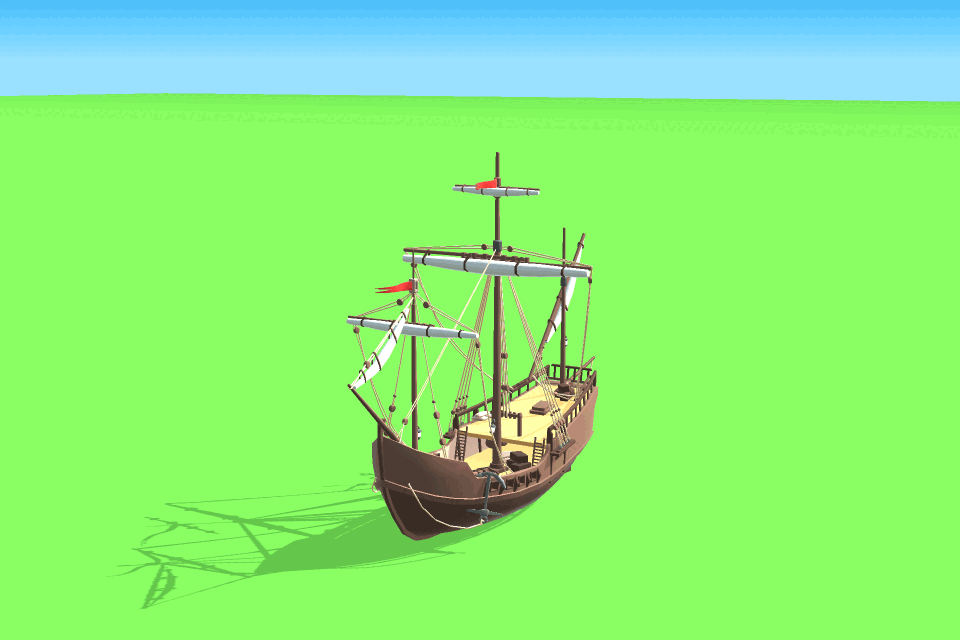
A ship you walk rather than ride. Guests wander the deck for the whole cycle, stop at the rail, then file off again.
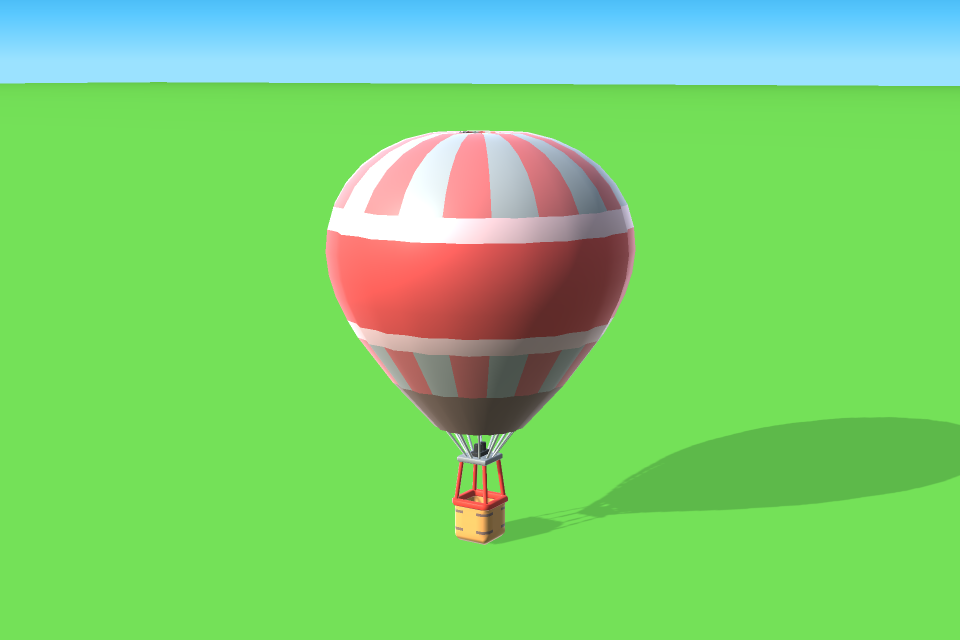
Cheap, pretty and popular with everyone. A good first ride while the park is still finding its feet.
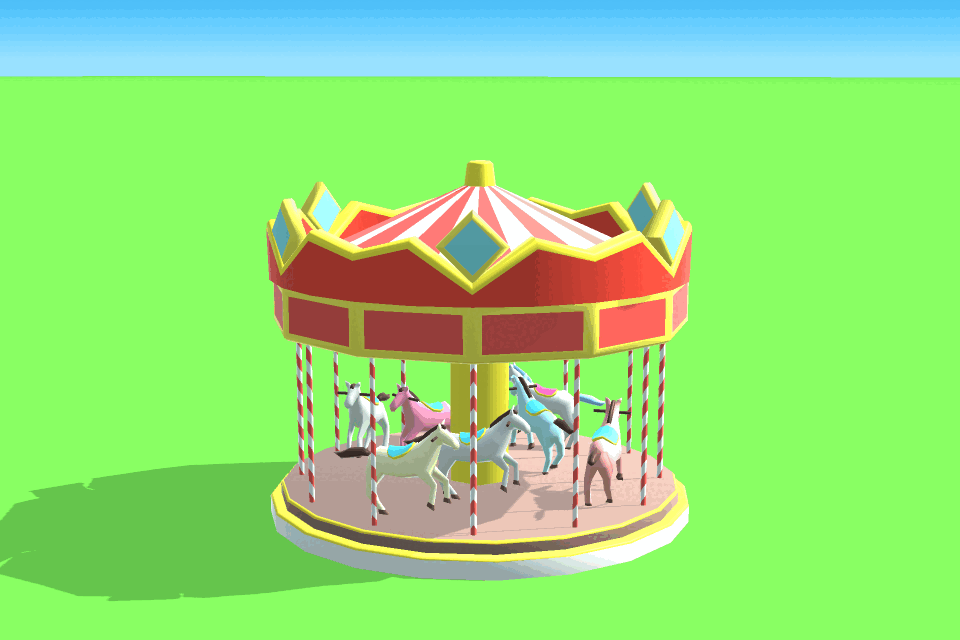
The classic. Lit up under its canopy after dark, and one of the friendliest rides in the park.
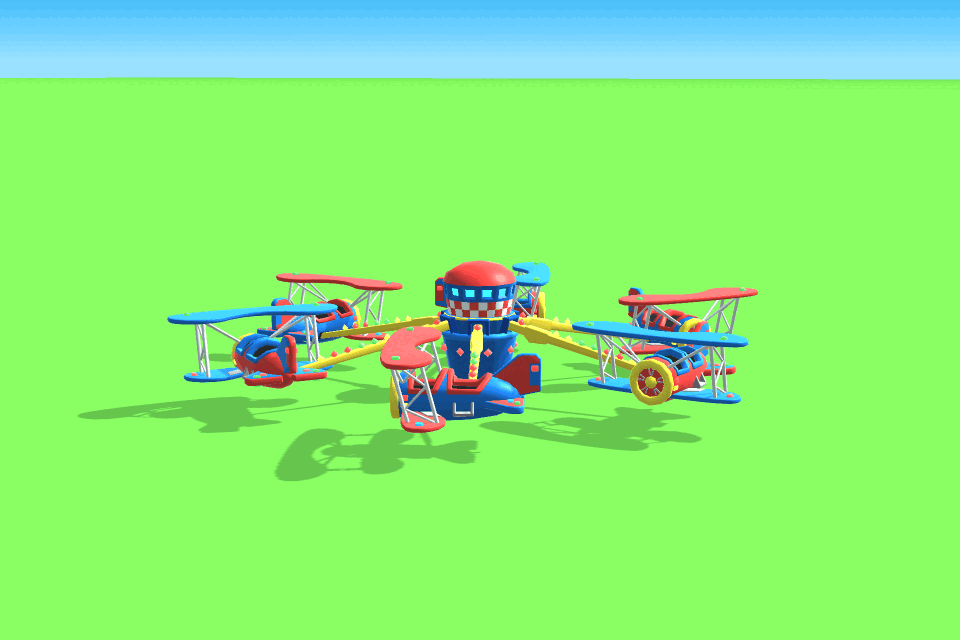
Little planes on arms. Barely more exciting than a carousel and just as widely loved.
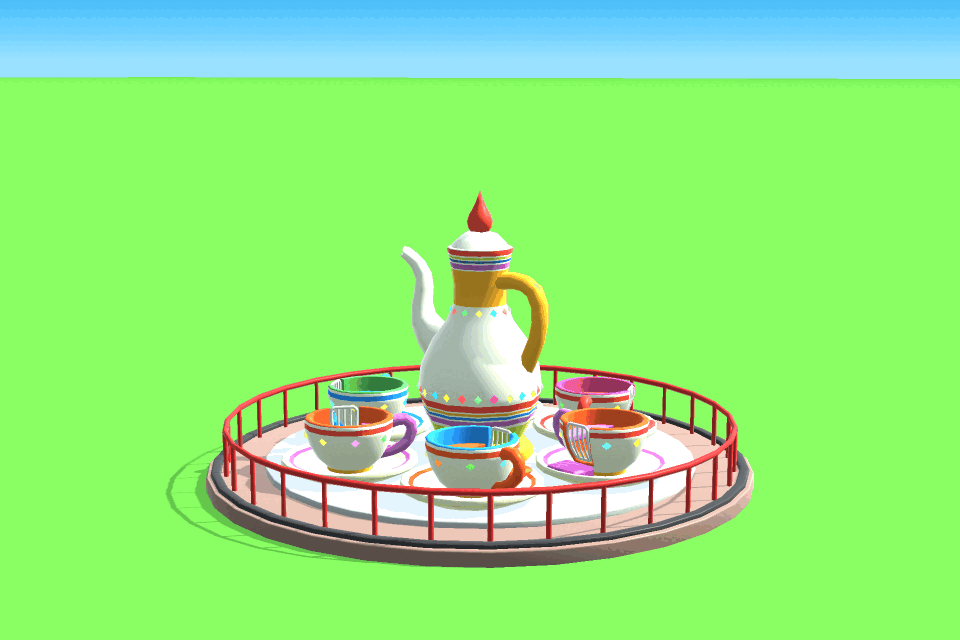
Spinning cups on a spinning floor. Cheap to buy, cheap to run and a reliable earner while the park is small.
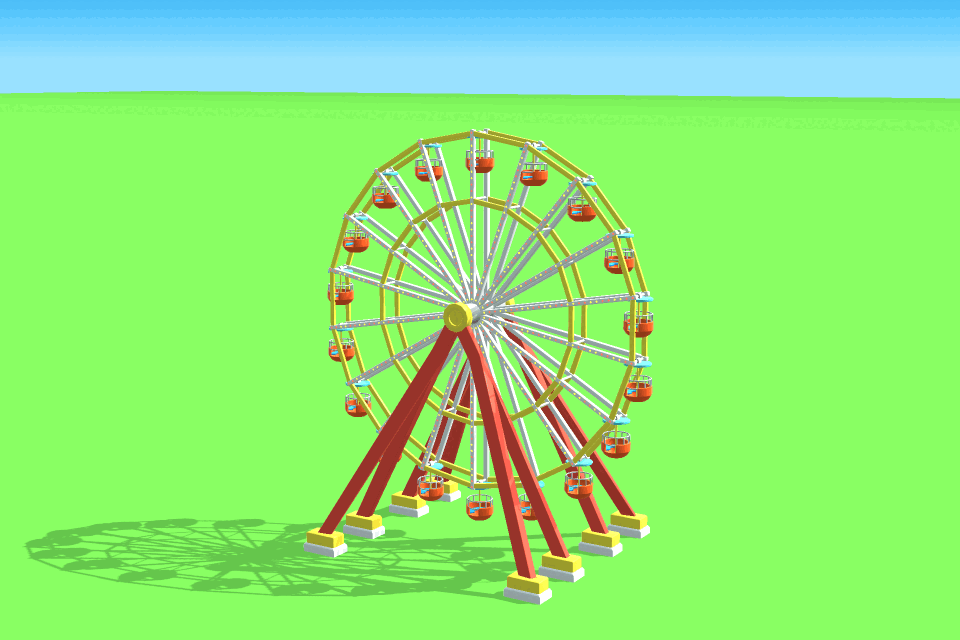
High ratings almost everywhere, and a landmark visible from the other end of the park. Each gondola hangs off the turning wheel and levels itself as it goes round.
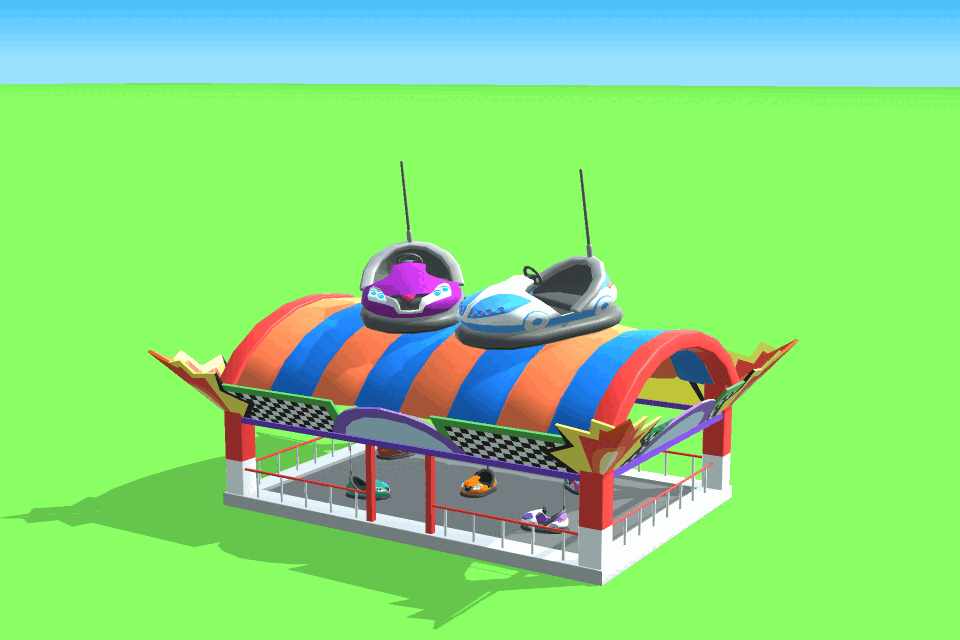
An arena of cars that really do bump into each other, with a run of lights along the barrier once it gets dark.
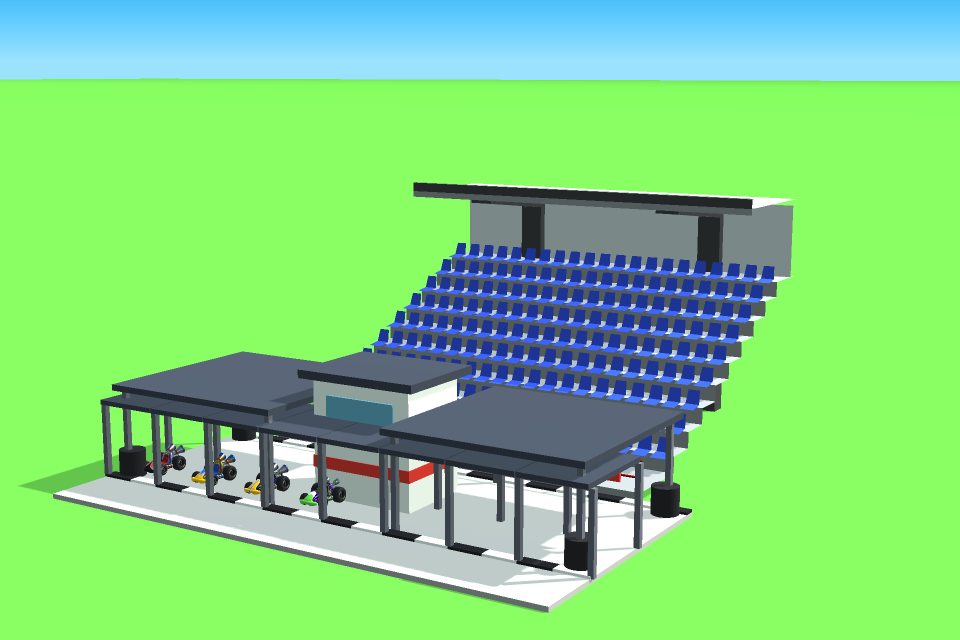
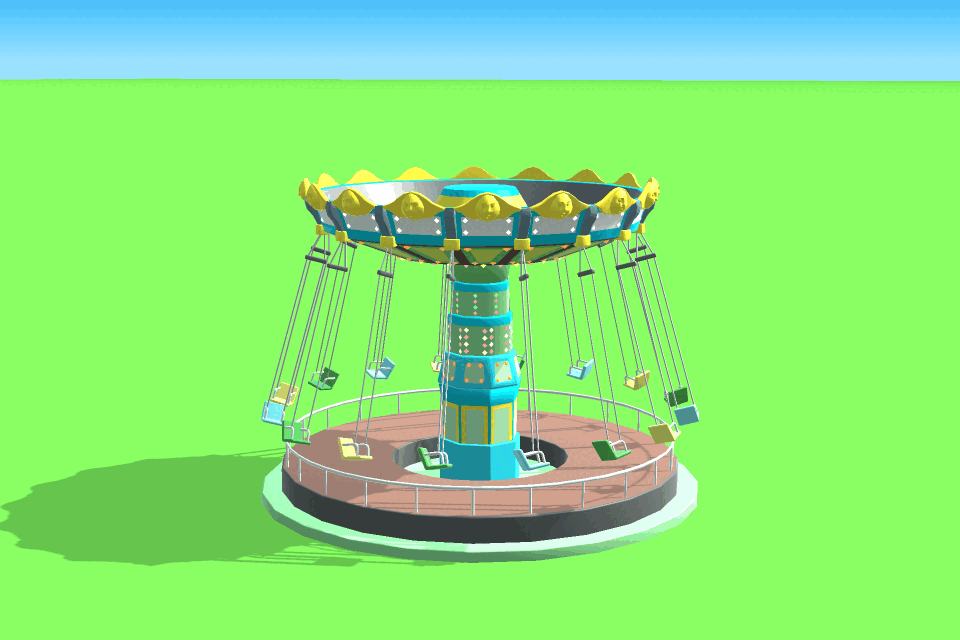
Sixteen chairs on chains, each with its own bulb at night. The point where a park stops being purely for small children.
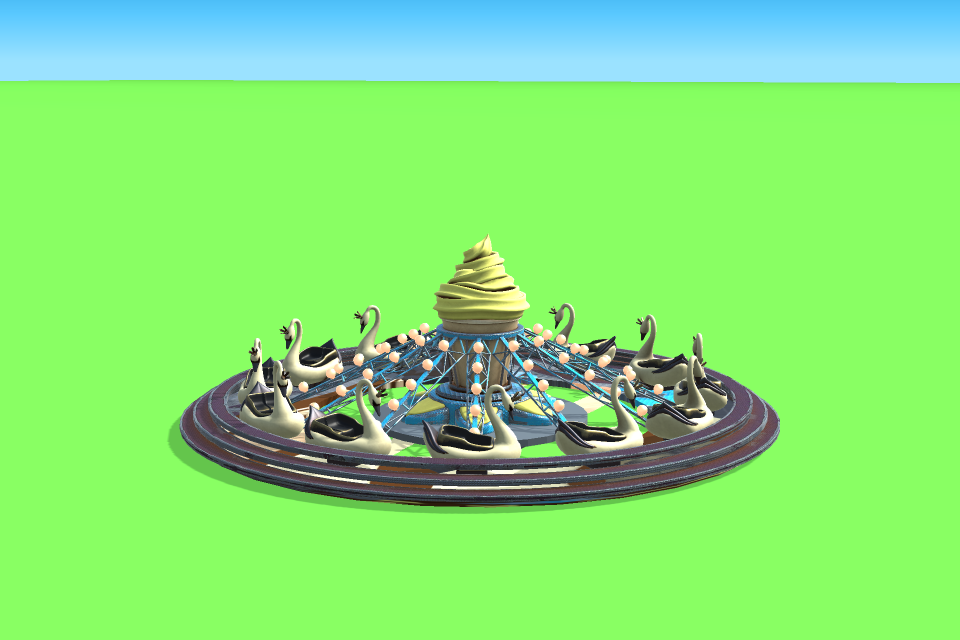
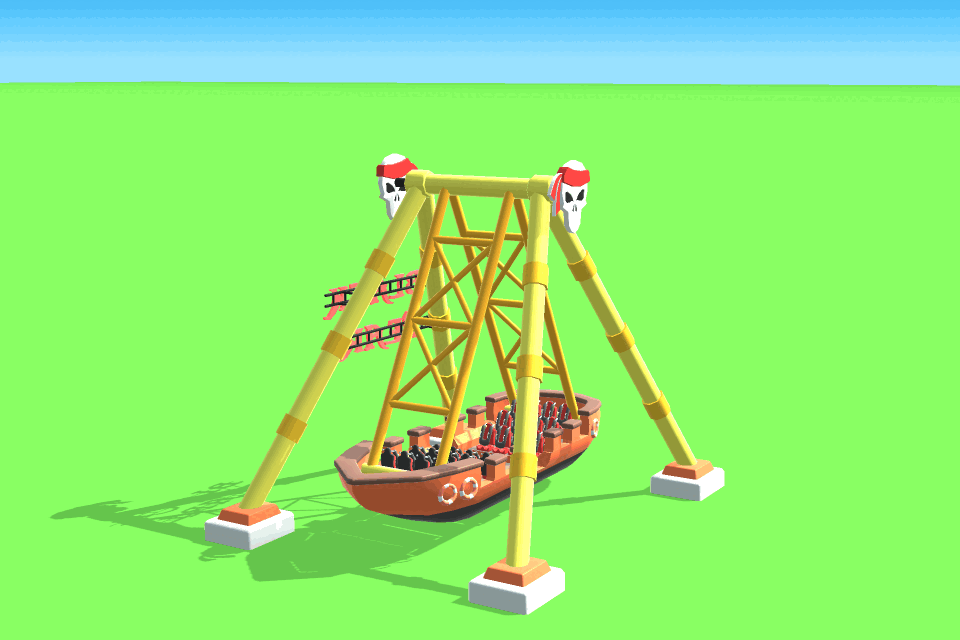
A full pendulum: hard left, hard right, twice over, then settling back to the middle. It runs to a fixed pattern, so it is the one ride with no speed dial.
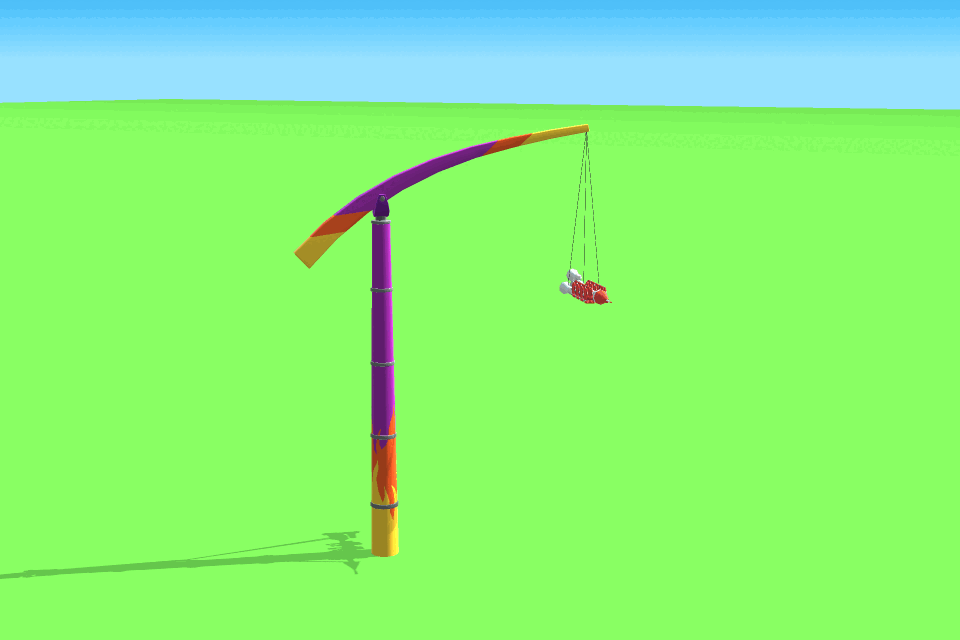
Eight seats flung out over the park. Expensive, and worth it for the guests who came looking for exactly this.
A train assembled onto the model's own rails. It crawls over the crest and races through the dips, because its speed comes from the height of the track rather than a number.
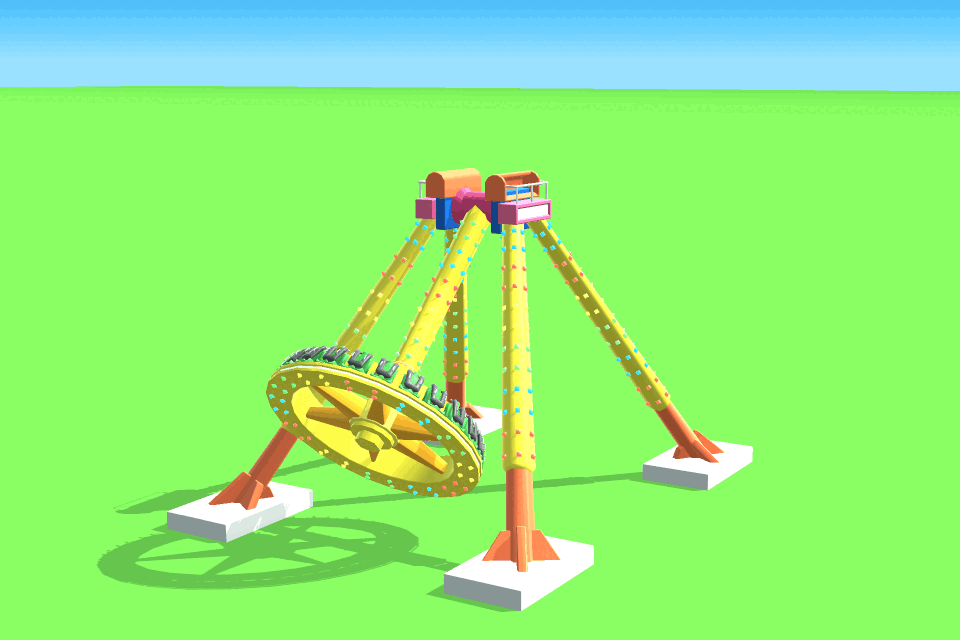
Not far off the wildest thing in the park, and cheaper than the ones that beat it.
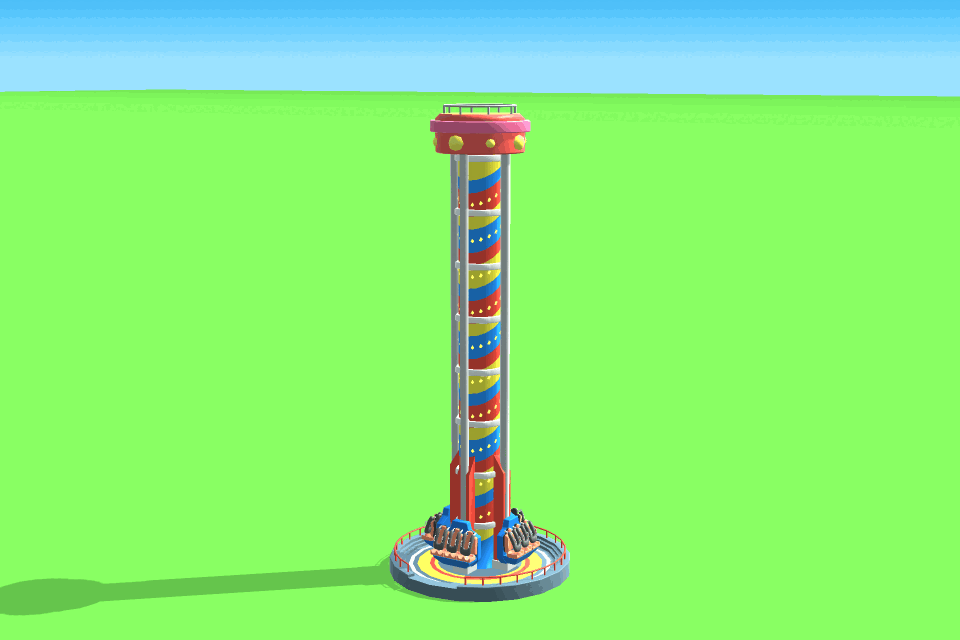
Climb, hold, drop. Maximum thrill, minimum family appeal - a ride you build for one kind of guest and nobody else.
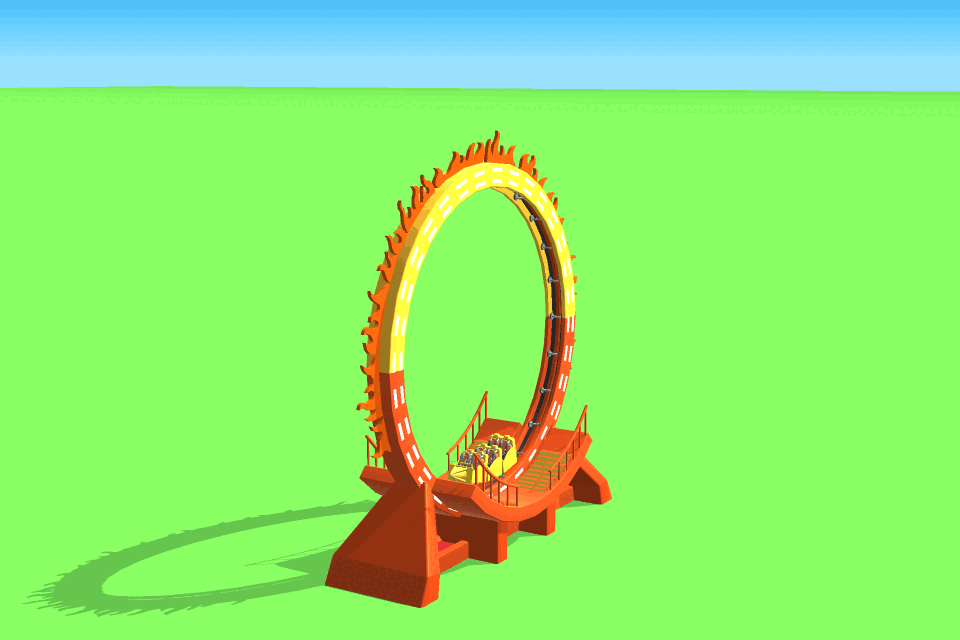
Straight over the top and round again. One of the few rides in the game rated a full 10 for thrill.
The most expensive ride in the game and the only one with a perfect 10 for prestige. Its train picks its own parking spot and lights the whole circuit after dark.
Click any ride to open its window. Everything here is set per ride, and every setting is saved with your park.
Closing a ride stops it taking anybody new - it does not freeze the cycle it is already running. A load already in their seats is seen round once and set down properly, because turning out guests who have just paid is the worse answer.
A dial in quarter steps from half speed to double. Faster means shorter cycles and a queue that moves - and a ride that works harder for it. The pirate ship is the exception: it swings to a fixed pattern and offers no speed setting at all.
A fraction rather than a headcount, so "at least half" means the same thing on a four-seat ride and a twenty-four-seat one. It starts at half and steps by a tenth. Guests wait in the line rather than in the seats, so a ride holding out for a full load has a visible queue outside it.
After two minutes with nobody new joining the line, the ride does whichever you told it to. Set off anyway runs the cycle at a loss. Turn guests away empties the line and runs nothing - and those guests sulk, take a mood hit, and will not come back to that ride for a while.
A cycle is charged per dispatch, not per rider, and the price is worked out from the ride itself - a base cost, plus more for every seat and more again for every point of thrill. A full load clears it several times over; a nearly empty one loses money. That is what makes the load dial worth turning.
The plot fence goes up with an entrance arch and an exit on it, and you can drag either one to any spot along the perimeter. Put the entrance where the queue can reach a road, and the exit where you want guests to spill out - past a shop, ideally.
Sooner or later a ride stops with smoke coming off it and a queue standing around. A mechanic walks over and fixes it, so hiring one before you need one is cheaper than it looks. A ride window that says it is waiting to fill is not broken - it is doing exactly what you told it to.
A queue is painted tile by tile, the way you paint a road. Hold shift to lay a straight run. The shape you draw is the shape guests stand in - there is nothing authored about it.
The first twenty seconds are free - that is just part of a day out. After that boredom builds with the square of the overrun, so a queue that is twice too long is far worse than twice as annoying.
| Time in the line | Mood cost |
|---|---|
| Up to 20 seconds | Nothing at all |
| About a minute | roughly 7 points |
| A minute and a half | roughly 22 points |
| Over two minutes | roughly 65 points |
A guest arrives at the park somewhere around 58. A long queue really can turn a good day into a bad one.
Every other ride arrives finished. The boat ride arrives as a jetty, a starter basin dug out behind it, six boathouses and a short stretch of lane - and it is up to you to carry that lane out into a closed circuit for the boats to run.
Dig water, then paint a boat lane on it. The lane has to close into a loop: the ride's own window tells you whether what you have drawn is a circuit, a dead end, a fork, or simply does not join up yet.
A dock is delivered with one boat and takes up to six. Each new boat gets its own berth, and a longer circuit is needed before the next one is allowed - so the loop you draw decides the size of the fleet.
One boat loads at the jetty while another is out on the water. They pull out bow first, come back in stern first, and give way to each other at the mouth of the lane.
Speed is constant, so the size of your circuit decides how long a trip takes. It is a restful ride, and guests get energy back for every second aboard - a big loop can send a worn-out guest back out at full.
Water is the most expensive thing in the game to dig, and filling it back in costs money too. Build the circuit around the lake the map gave you wherever you can - a mountain can even straddle the lane, so the boats sail in one side and out the other.
Not everything is available on day one. Rides sit in seven research tiers, and each tier costs more points than the one before it - 25,000 points multiplied by the tier.
Tier 1 is open from the moment you start, which is enough to build a small, cheerful, entirely profitable park. The looping coaster at tier 7 is a long way further on.
| Tier | Unlocks | Points |
|---|---|---|
| 1 | Teacups, mini ferris wheel, plane carousel, balloon ride, merry-go-round, bouncy castle, boat ride | free |
| 2 | Sky ride, ferris wheel, bumper cars, pirate ship (museum) | 50,000 |
| 3 | Swing carousel | 75,000 |
| 4 | Pirate ship | 100,000 |
| 5 | Sky swing, spin swing, roller coaster (small) | 125,000 |
| 6 | Loop ride, drop tower | 150,000 |
| 7 | Roller coaster (big) | 175,000 |
Hungry, thirsty, tired guests do not queue for anything.
See the shops